A well-maintained floor scrubber lasts 5 to 10 years and runs reliably shift after shift. A neglected one breaks down mid-clean, voids its warranty, and costs your Brisbane business thousands in emergency repairs and lost productivity. The difference comes down to a few simple habits that most operators skip.
This guide covers daily, weekly, and monthly maintenance tasks, Brisbane-specific climate considerations, and how to know when your machine needs professional attention.
Daily Maintenance Checklist (5 Minutes After Every Use)
These steps take five minutes and prevent 80% of common breakdowns.
After every shift:
- Drain and rinse the recovery tank. Dirty water left overnight breeds bacteria and corrodes internal components.
- Rinse the squeegee blades with clean water. Check for nicks, tears, or debris caught in the blade.
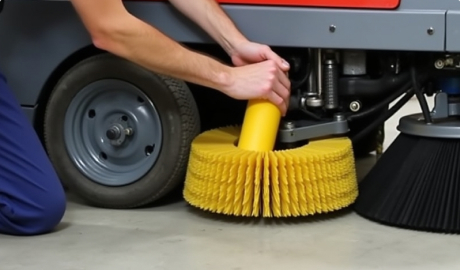
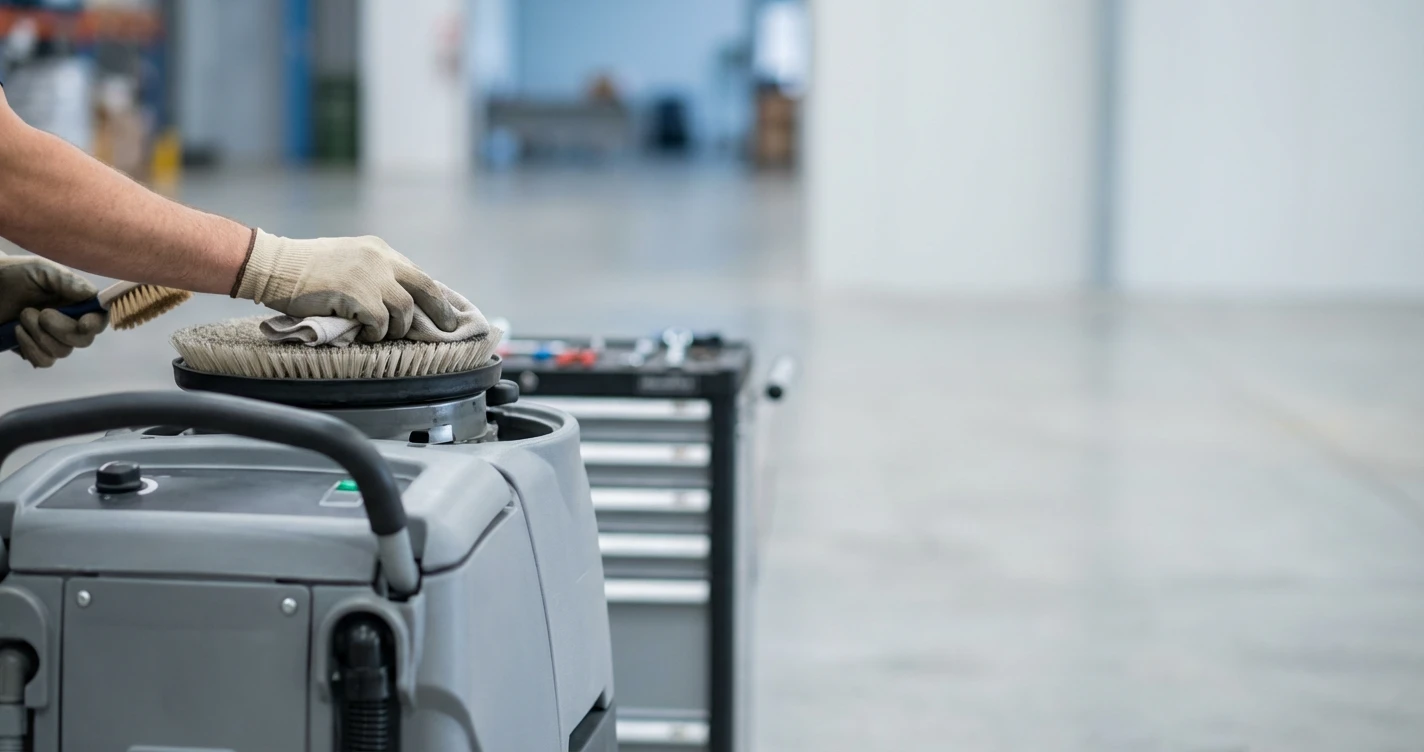
- Remove and rinse the scrub brush or pad. Check for wear. A worn brush reduces cleaning effectiveness before it causes a mechanical problem.
- Wipe down the machine exterior, especially around the control panel and battery compartment.
- Park the machine with the squeegee in the raised position and recovery tank lid open to allow airflow.
These steps are non-negotiable. Every floor scrubber manual from Tennant, Nilfisk, and Duplex lists them as required daily care, and skipping them is the fastest way to void a warranty.
Weekly Maintenance Tasks
Check battery water levels. Lead-acid batteries in floor scrubbers need distilled water added regularly. In Brisbane’s subtropical climate, water evaporates faster than in cooler regions. Check weekly during summer (November to March) and fortnightly in winter. Gel batteries and lithium-ion batteries do not require this.
Inspect the squeegee assembly. Remove the squeegee and check both blades for wear. Most squeegee blades have four usable edges. Flip or rotate before replacing. A worn squeegee leaves streaks and water on the floor, which is a slip hazard.
Clean the solution filter and recovery tank filter. Clogged filters reduce water flow and vacuum suction. Rinse with clean water weekly. Replace when the mesh is damaged or permanently stained.
Check hoses and connections. Look for cracks, kinks, or loose fittings in the solution and vacuum hoses. Brisbane’s heat and UV exposure can degrade rubber hoses faster than expected, particularly on machines stored outdoors or in un-insulated sheds.
Monthly Maintenance Tasks
Deep clean the recovery tank. Remove and scrub with a mild detergent. Check for cracks or warping. In Brisbane’s humidity, mould can develop inside tanks that are not fully dried between uses.
Inspect the brush deck and pad driver. Check the pad driver plate or brush coupling for cracks. Verify the brush pressure adjustment is within specification.
Clean battery terminals. Corrosion builds up faster in humid environments. Clean terminals with a baking soda and water solution, then apply a thin coat of dielectric grease.
Test the vacuum motor. Listen for unusual sounds during operation. A grinding or high-pitched whine indicates bearing wear. Catching this early avoids a $500 to $1,500 motor replacement.
Brisbane Climate: What Your Manual Does Not Tell You
Floor scrubber manuals are written for generic conditions. Brisbane’s subtropical climate creates specific challenges.
Humidity and battery water loss. Brisbane’s average humidity sits above 60% year-round. Despite this, the heat drives evaporation from lead-acid batteries faster than many operators expect. Check water levels weekly from October through March, not monthly as some manuals suggest.
Wet season debris. The November to March wet season means more dirt, mud, and water tracked into commercial facilities across SE QLD. Your scrubber works harder during this period. Increase brush and squeegee inspections to twice weekly and monitor solution consumption.
Mould in recovery tanks. The combination of warmth and moisture creates ideal mould conditions inside recovery tanks. Always leave the tank open after draining to allow complete drying. During the wet season, a light spray of white vinegar after rinsing helps prevent mould growth.
UV and heat damage. Machines stored in un-shaded areas, outdoor loading docks, or hot warehouses in Rocklea and Brendale will see faster degradation of rubber hoses, seals, and plastic components. Store machines out of direct sunlight where possible.
5 Mistakes That Void Your Warranty
- Using the wrong cleaning chemicals. Always use chemicals recommended by the machine manufacturer. High-foam or solvent-based chemicals can damage seals, pumps, and solution tanks.
- Overcharging batteries. Leaving a battery on the charger over weekends or holidays degrades battery life. Use a smart charger with automatic shutoff.
- Operating with a damaged squeegee. Running a scrubber with a torn or missing squeegee blade can cause water ingress into electrical components.
- Ignoring error codes. Modern scrubbers from Tennant and Nilfisk display diagnostic codes. Ignoring them and continuing to operate often voids warranty coverage for the resulting damage.
- Using non-OEM parts. Some aftermarket parts may seem cheaper, but using them can void manufacturer warranty. Our parts department stocks genuine parts for all major brands.
When to Repair vs When to Trade In
Repair makes sense when:
- The machine is under 5 years old
- Repair cost is under 30% of replacement value
- The issue is a single component failure (motor, controller, battery)
- The machine frame and body are in good condition
Trade-in makes sense when:
- Repairs are becoming frequent (more than 3 breakdowns in 6 months)
- Total repair costs over the past year exceed 50% of a new machine
- The machine no longer meets your facility’s cleaning requirements
- Technology upgrades (lithium batteries, autonomous operation) would deliver significant labour savings
Commercial Cleaning Machines offers trade-in programs for businesses upgrading their fleet.
FAQ
How often should I service my floor scrubber professionally? Every 250 to 500 operating hours, or every 3 to 6 months for most Brisbane businesses. Our preventative maintenance plans include scheduled service visits tailored to your usage.
What is the most common cause of floor scrubber breakdowns? Battery neglect. Low water levels, corroded terminals, and overcharging account for roughly 40% of the service calls we handle across Southeast Queensland.
Can I do floor scrubber maintenance myself or do I need a technician? Daily and weekly maintenance should be handled by operators. Monthly checks can be done in-house if staff are trained. Anything involving the electrical system, vacuum motor, or solution pump should be handled by a certified technician.
How quickly can you respond to a breakdown in Brisbane? Same-day in most cases. Our service vans are fully stocked with common parts and cover Brisbane, Sunshine Coast, Gold Coast, Ipswich, and Toowoomba. Contact us and we dispatch the nearest available technician.
Keep your floor scrubber running at its best. Commercial Cleaning Machines provides same-day repairs, preventative maintenance plans, and genuine parts for Tennant, Nilfisk, Duplex, and FloorBotics across SE QLD. Book a service or contact us for a maintenance plan quote.