Floor scrubbers work because they take the dirty water away instead of spreading it. A scrubber lays down clean solution, agitates the floor under pressure, and vacuums the dirty water straight into a separate tank, all in one pass. A mop picks up soil on the first pass and puts most of it back on every pass after that.
That one difference explains almost everything else: why mopped floors look tired, why they stay wet, and why cleaning hours creep up year on year without anyone knowing why. We get called out to Brisbane sites with exactly that complaint, and it’s rarely the crew. It’s the mop.
Do floor scrubbers really work?
Yes. The soil leaves the building in the recovery tank, the floor behind the machine is dry enough to walk on straight away, and the result is the same on every pass because the machine sets the pressure, not the operator.
Where mopping fails is the bucket. By the third room the bucket is the dirtiest thing in the building and the mop is redistributing it. A scrubber uses fresh solution for every metre of floor and never reuses the water it recovers. That’s the whole argument for the machine, and it holds on any hard floor bigger than a few hundred square metres.
Is it better to mop or scrub floors?
Scrub, on any open hard floor cleaned regularly. Mop, on small, broken-up areas where the setup time of a machine outweighs the cleaning time. The comparison:
- Water and soil. A mop reuses one bucket across the whole area. A scrubber applies clean solution and recovers it, so soil is removed rather than moved.
- Drying. A mopped floor stays wet for minutes to half an hour. A scrubbed floor is walkable behind the machine, which removes the slip window and the wet floor signs blocking a corridor.
- Texture. Anti-slip and textured floors have grip because they have valleys. A flat mop head skims them. A brush or pad under down pressure cleans into them.
- Consistency. Two cleaners, two buckets, two very different floors. A machine gives the same result whoever is rostered.
- Speed. Mopping speed is capped by the person. Scrubbing speed is capped by the machine’s path width and walking pace. On a large open floor the gap is several times, and on a ride-on it isn’t close.
- Setup. A machine has to be filled, run, emptied and rinsed. On three small bathrooms the mop wins on setup alone.
For the numbers behind the speed line: our ROI calculator assumes manual cleaning at roughly 121 square metres an hour, and a robotic scrubber near 1,300 on the machine pass. A walk-behind sits between those, and Tennant’s walk-behinds clean a 430 mm path on the compact T2 up to an 800 mm path on the T500, the same width as the T7 ride-on.
Why are my floors still dirty after mopping?
Because the mop is putting the dirt back. Three things happen every time.
The bucket goes grey after the first room and every room after that is washed in dirty water. The mop head can’t reach into the texture of anti-slip or grouted floors, so soil builds up in the valleys and the floor looks dull no matter how often it’s done. And the water left behind dries with the soil still in it, which is the film you can see against the light on a “clean” floor.
On commercial kitchen floors it’s worse, because grease bonds to the surface and a mop lubricates it rather than lifting it. A scrubber with the right degreaser and brush pressure breaks it down and takes it away. We wrote up kitchens and venues separately in cleaning equipment for Brisbane hospitality floors.
What cleans floors better than a mop?
A scrubber-dryer, for any hard floor. What professional cleaners use depends on the floor.
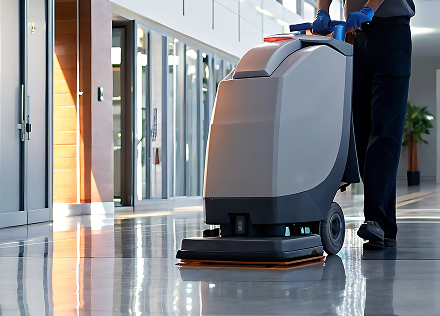
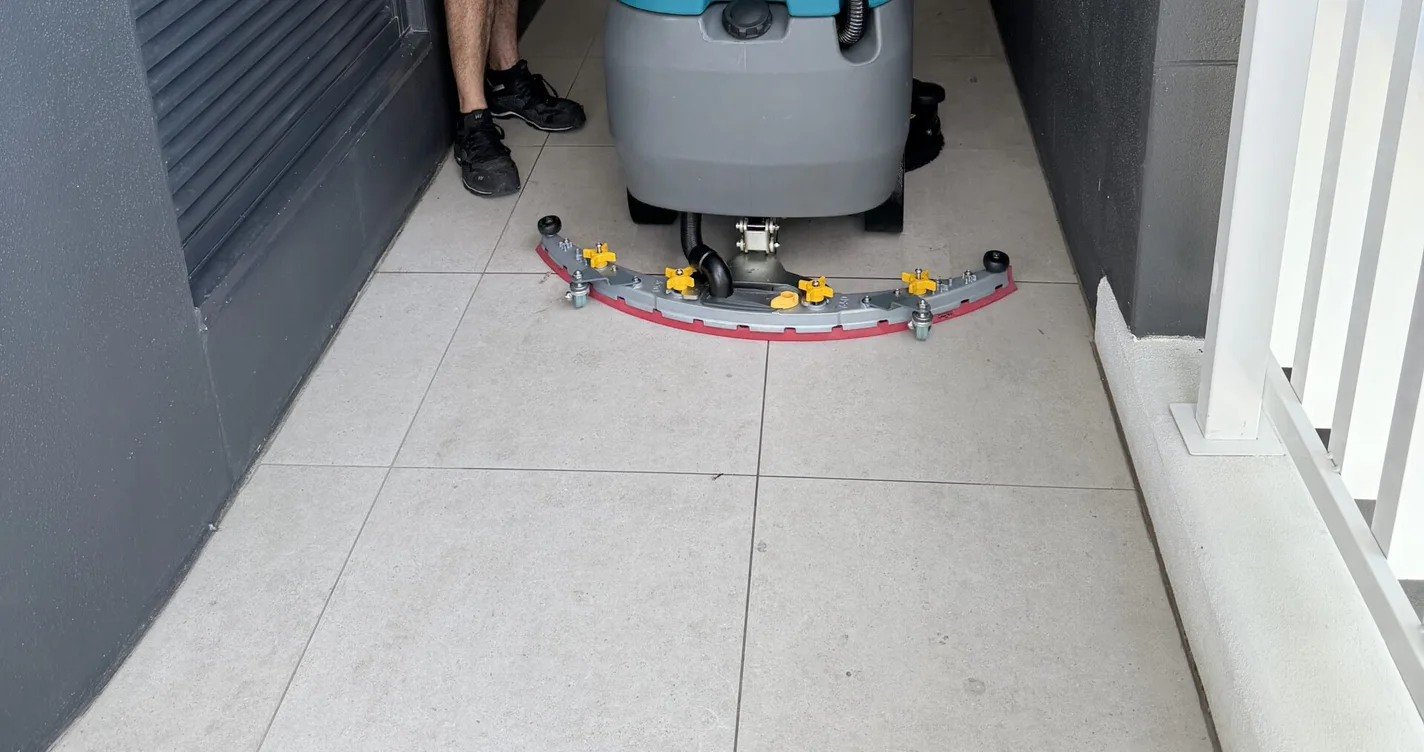
- Smooth vinyl, sealed tile, epoxy and sealed concrete: a disc scrubber. The walk-behind floor scrubbers in our range cover offices, schools, clinics and retail.
- Textured, non-slip and grouted floors: a cylindrical brush scrubber that cleans into the profile and lifts debris into a tray.
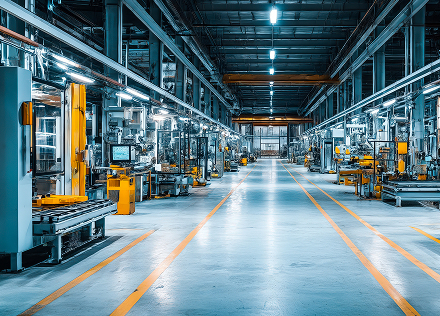
- Large open floors, warehouses and shopping centres: a ride-on scrubber, where time matters more than manoeuvrability.
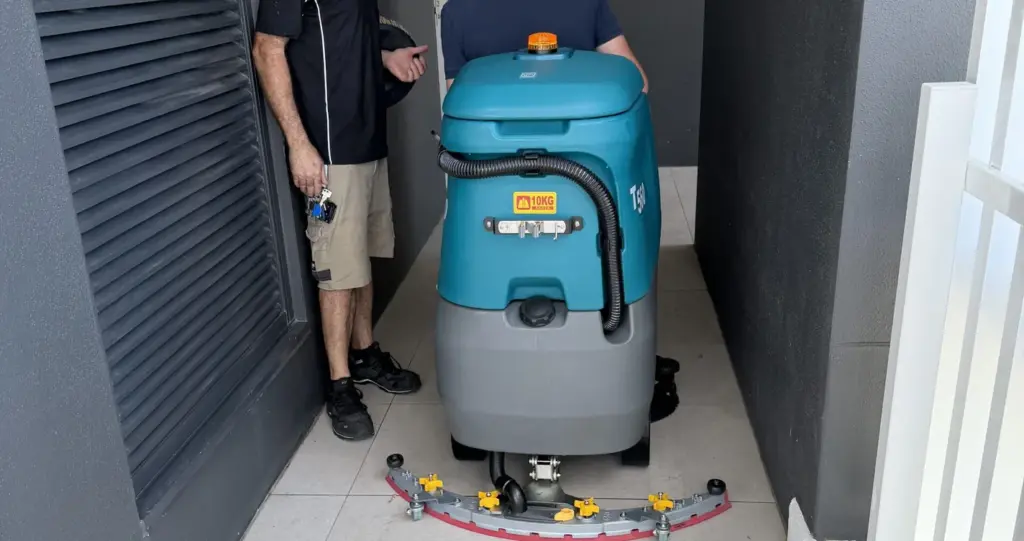
- Small, cluttered areas and bathrooms: still a mop, or a compact scrubber if the floor is done daily.
For hygiene-led sites the difference is the whole point. Healthcare and aged care and childcare centres are cleaning to a standard that a shared bucket can’t meet.
When does a mop still win?
Three small bathrooms. A cluttered back-of-house with stock on the floor. A site cleaned once a week where the machine would sit idle. Anywhere the floor is broken up into small disconnected rooms.
A machine has to be unloaded, filled, run, emptied and rinsed, and that overhead is fixed whether you’re cleaning fifty square metres or five thousand. Below a few hundred square metres of connected hard floor, the mop’s zero setup time beats the machine’s cleaning speed. Above it, the machine wins and the gap grows with the area.
The honest answer for most Brisbane sites is both: a scrubber on the open floor, a mop for the edges and the small rooms.
What does switching cost, and what does it save?
A scrubber costs more than a mop. The comparison that matters is labour hours per week against the machine over its life, plus consumables and servicing. Small walk-behind scrubbers run from about $4,000 for entry-level machines to around $10,000 for premium long-life units, and a well-maintained scrubber lasts five to ten years.
If you want a real number rather than ours, hire a floor scrubber for a fortnight through our hire hub and time your own floor with your own staff. That beats any productivity figure on a brochure, including ours.
How to switch without wasting money
Most sites that regret the purchase made one of three mistakes.
- Bought on width alone. A wide deck that won’t fit between the shelving is a slow machine. Measure the tightest aisle first.
- Ignored the floor type. Textured and anti-slip floors chew through standard squeegees and need a brush, not a pad. Sealed vinyl and polished concrete don’t. The pad, brush and squeegee matter more than the badge on the machine. Our guide on how to choose a floor scrubber for a Brisbane site works through it floor by floor.
- Skipped the training. Most early failures we attend are a squeegee set wrong or a machine put away with a full recovery tank. Fifteen minutes at handover fixes both.
Start with one machine on your worst floor rather than re-equipping the whole site. You’ll learn what you actually need.
If you want help matching a machine to your floor, send us your floor type and area and we’ll tell you what fits from the commercial floor scrubber range. We also run servicing and same-day repairs across Brisbane and the Sunshine Coast once it’s in service.
Common questions
Do floor scrubbers work on textured or non-slip floors?
Yes, with a cylindrical brush machine. Disc pads skim texture. Brushes clean into it and lift the debris into a tray.
How much faster is a scrubber than mopping?
Several times on an open floor, more on a ride-on. Our calculator assumes manual cleaning at about 121 square metres an hour; a walk-behind covers a 430 to 800 mm path at walking pace with no bucket changes.
Is a floor scrubber worth it for a small business?
If you have a few hundred square metres of connected hard floor cleaned most days, usually yes. If the floor is small rooms and bathrooms, a mop is the right tool.
Why does my floor look streaky after scrubbing?
Worn squeegee blades or the squeegee angle, not the machine. Rotate the blade to a fresh edge and check the pitch before replacing anything.