Cleaning a hospital or an aged care home is not the same job as cleaning an office with more rules bolted on. The floor is a clinical surface. The vacuum is part of your air quality plan. The machine that runs at 2am in a dementia wing has to be quiet enough that nobody wakes up.
We service healthcare sites across Brisbane and the Sunshine Coast, so most of what follows comes off the bench and out of the van rather than a brochure.
What Makes Healthcare Cleaning Different
Three constraints show up on nearly every healthcare site we visit.
- The floor cannot stay wet. A wet floor in an aged care corridor is a fall risk, and falls are the outcome the whole facility is organised around avoiding.
- There is no downtime. Offices close. Wards do not. Equipment has to work around occupied rooms, at hours when noise matters.
- Cross-contamination is a real failure mode. The same mop bucket moving between an isolation room and a common area undoes the work.
Equipment choice can solve all three, or make all three worse.
Scrubber-Dryers, Because the Floor Has to Be Dry
This is the single biggest upgrade most healthcare sites can make. A mop leaves water behind and pushes soil around. A scrubber-dryer lays down solution, scrubs, and vacuums it back up in one pass. The floor behind the machine is walkable.
What Fits a Ward
Corridors are long and narrow, rooms are small, and there is furniture everywhere. Big machines do not help.
- Nilfisk SC351 and the SC250 are compact enough for bathrooms and bed bays.
- i-mop Lite gets under and around furniture where a rigid deck cannot go.
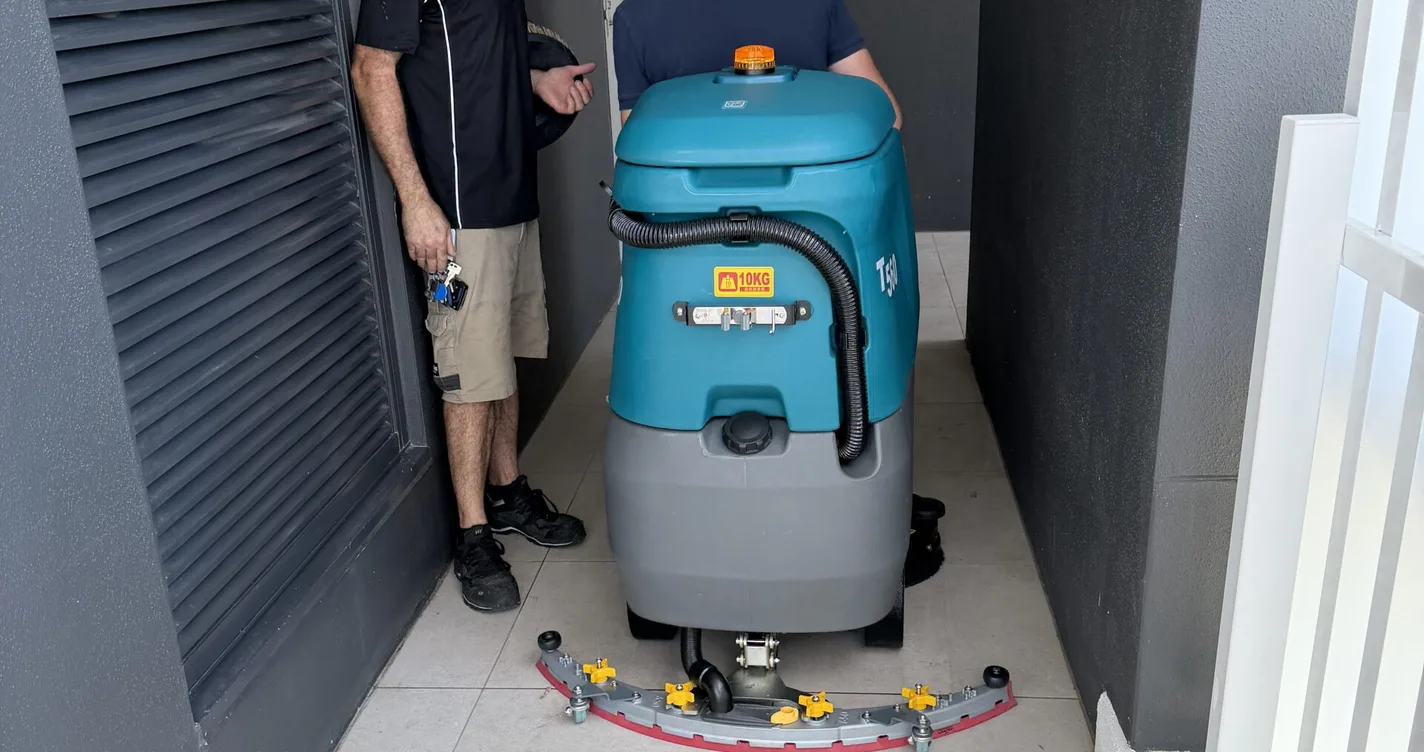
- Tennant T291 suits longer corridor runs without becoming unwieldy.
Ask about noise before you buy. Some machines have a quiet mode designed for exactly this, and on a night shift it is the difference between a machine you can use and one that sits in the cupboard.
HEPA Vacuums and Air Quality
A standard vacuum with a worn bag is a dust distribution system. In a clinical setting that matters more than it does in a warehouse.
Sealed HEPA units keep what they pick up. The Nilfisk VP400 HEPA XTCP and the GD930 Pro HEPA S2 are the two we place most often in healthcare. Both are quiet enough for occupied areas.
For remediation work, or after building and maintenance jobs on site, an air scrubber filters the room itself rather than the floor.
One field note. HEPA only works if the filter is actually seated and the bag is changed on schedule. We open machines that have been run for months on a split bag, and the filter rating on the sticker stops meaning anything at that point.
Steam, Where Chemicals Are a Problem
Steam suits the places where you want to sanitise without adding another chemical to the room: bathrooms, fixtures, mattresses, wheelchairs, and the awkward grouted surfaces that mops skate over.
The Duplex Jetsteam and Jetvac range covers this. The Jetvac units steam and vacuum in the same pass, which is what you want on a surface you do not want to leave damp.
Steam is not a replacement for your disinfection protocol. It is a way to do more of the physical cleaning with less chemical load, which is usually the thing infection control is asking for anyway.
Robotic Scrubbers on the Long Runs
Healthcare has a lot of what robots are good at: long, repeatable corridor runs that have to be done every single night regardless of who called in sick.
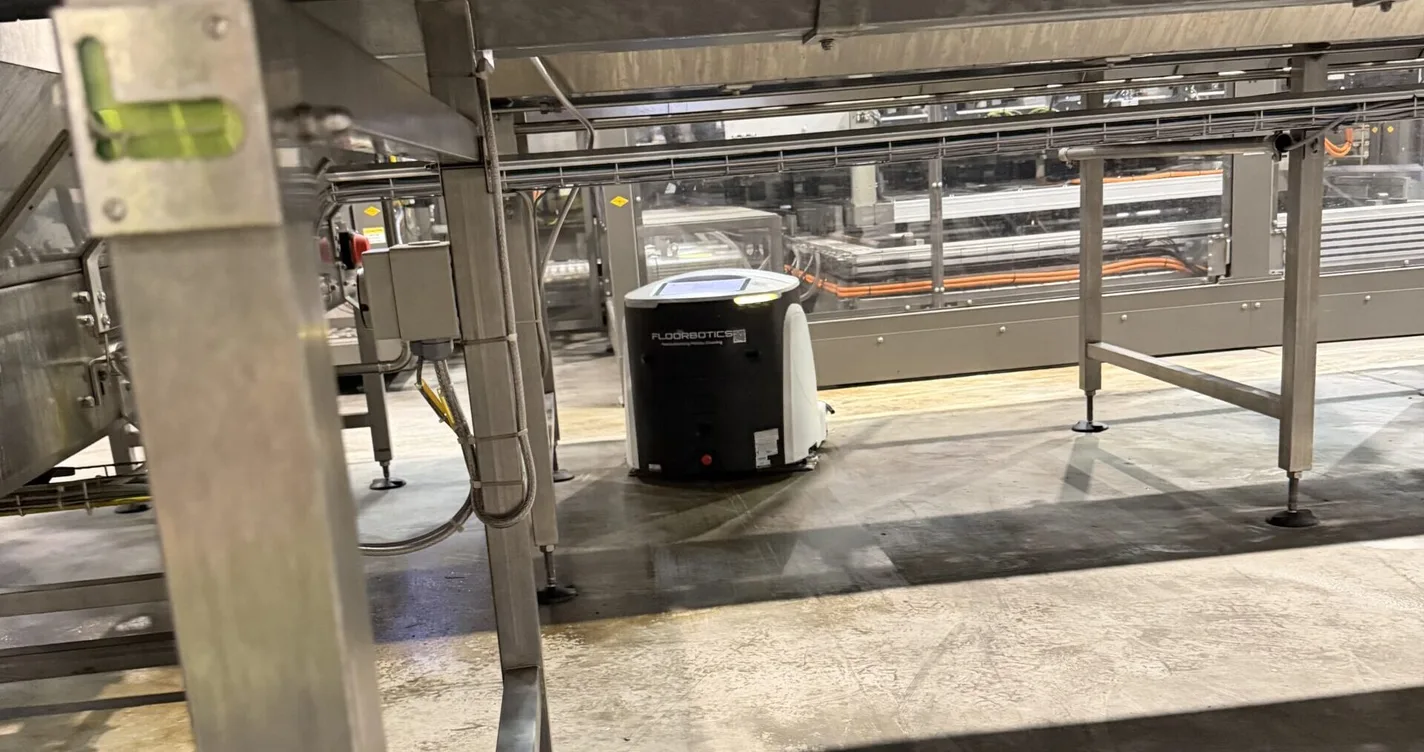
A robotic scrubber like the FloorBotics Quad 500 handles the open corridor while your staff do the detail work that a machine cannot: the bathrooms, the touch points, the rooms with people in them.
We will tell you plainly when a site is not suited to it. Cluttered floors, constant furniture movement and lots of short disconnected spaces are where robots underperform, and healthcare has plenty of all three. It depends on the building.
Specifying for a Retrofit Rather Than a New Build
Most healthcare equipment decisions we are asked about are replacements, not new fit-outs, and that changes the brief.
On a retrofit you inherit the building. Door widths, lift dimensions, the size of the cleaner’s store and where the taps are were all decided years ago, and none of them will move for a new machine. Measure those four before you shortlist anything.
The other inherited constraint is the floor itself. Older wards often carry sheet vinyl with welded seams and coved skirting, which is excellent for infection control and unforgiving of a machine with the wrong squeegee. If the existing machine has been leaving water in the coving, that is a squeegee and pad problem far more often than a machine problem, and it is cheap to fix.
What to Ask a Supplier Before You Buy
Four questions separate a machine that suits a ward from one that will sit in a cupboard.
- What is the sound level in decibels? Not “it is quiet”. A number. If any cleaning happens while residents or patients are in the area, this decides whether staff will actually run it.
- What is the machine width, not the cleaning path? The path is the marketing number. The width is what has to fit through the door.
- What is the run time and the charge time? Both. A machine that runs four hours and charges eight cannot cover two shifts.
- What is the parts lead time in Australia? A cheap machine with a six week parts wait is not cheap in a building that cannot stop cleaning.
We are an authorised dealer for Tennant, Nilfisk and Duplex and we stock parts locally, which is the honest reason we recommend those brands into healthcare over cheaper imports. When a ward machine goes down it has to be back the same week, and that depends on the shelf, not the badge.
The best machine on the site is worthless if it is charged wrong or if nobody empties the recovery tank.
Three things worth writing into the protocol:
- Colour-coded pads and tools per zone, so nothing crosses from isolation areas to common areas.
- Batteries on charge at the end of every shift, not when they run flat. Deep cycling kills batteries faster than anything else we see.
- Recovery tanks emptied and rinsed at end of shift. A tank left full overnight is the source of most “the machine smells” calls we get.
Keeping It Running
Healthcare sites cannot wait a fortnight for a part. We run same-day repairs from stocked service vans across Brisbane, the Sunshine Coast, the Gold Coast, Ipswich, Logan, Moreton Bay and Toowoomba, and we book scheduled servicing at six or twelve month intervals depending on how hard the machine works.
If you are specifying equipment for a new wing, or replacing machines that are not coping, talk to us about your floor plan. Send through the layout and the hours you clean, and we will tell you what actually suits the site.