In today’s labour strapped world, many Australian businesses are asking whether investing in commercial cleaning robots is actually worth it.
The short answer is yes, especially if you are trying to maintain high cleaning standards without constantly juggling staff.
Cleaning robots are not only about replacing labour. They are about consistency, reliability, and taking pressure off teams that are already stretched.
Why Cleaning Robots Are Gaining Momentum
The rise of robotic cleaning machines is not about chasing new technology. It is a direct response to challenges the industry is facing right now:
- Labour shortages. Finding and retaining reliable cleaning staff is increasingly difficult. Robots cover routine, repetitive work.
- Rising costs. Wages and overheads continue to increase, while robots offer a predictable, fixed operating cost.
- Consistency. Robots do not get tired or cut corners. They deliver the same standard, every shift.
- Improved safety. Machines reduce risks linked to repetitive strain, heavy lifting, and exposure to hazardous environments.
- After-hours flexibility. Robots can operate overnight or outside business hours, reducing disruption to tenants, customers, and staff.
The most successful sites do not use robots as replacements, but as support. Robots handle the repetitive floor work, allowing cleaners to focus on detail and high-value tasks.
The Real ROI: Consistent Cleaning and Better Use of Staff
One of the biggest benefits of cleaning robots is how well they maintain a consistent level of cleanliness.
They work best in wide open areas, moving up and down like a lawnmower and keeping floors clean day after day. Instead of waiting for floors to get dirty and then doing a deep clean, robots focus on maintaining a high standard all the time.
That consistency is where the real return on investment comes from.
When Does It Make Sense to Invest?
Robots are not suitable for every site, but in the right environment they earn their keep quickly.
They perform best in:
- Large, open areas. Warehouses, schools, hospitals, gyms, and shopping centres, because the layout stays consistent night to night.
- Sites with frequent floor cleaning. Daily scrubbing or vacuuming quickly adds up in labour hours. Robots can significantly reduce this load.
- Sites that struggle to fill shifts. The machine turns up every night regardless of who called in sick.
Match the Machine to the Floor Size
Most disappointing robot purchases we see are a sizing problem, not a technology problem. The range splits fairly cleanly.
- Mid-size sites. The FloorBotics Quad 500 sweeps, vacuums, mops and scrubs in one pass, covers up to 1,440 m² an hour and runs about 6 hours. Its 17 litre solution tank is the limit to plan around.
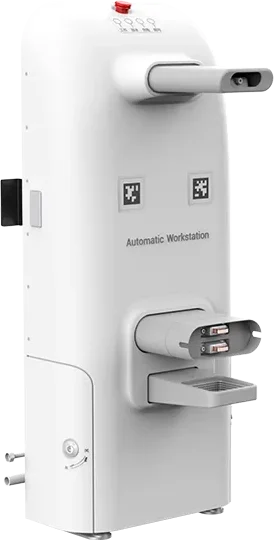
- Large open floors. The Quad 800 lifts that to 1,800 m² an hour with a 42 litre tank, and docks to a workstation that refills and drains it without a person.
- Very large sites. The Quad 1100 carries 140 litres and runs up to 7 hours, which is where genuinely unattended overnight cleaning starts.
- Debris rather than film. If the problem is dust and rubbish, a sweeper suits it better. The FloorBot Max 100 covers 3,000 m² an hour with a 100 litre hopper and runs up to 8 hours.
- Congested spaces. The Tennant X4 ROVR has a 500 mm cleaning path for areas larger robots cannot work, and runs as quiet as 62 dBA.
The tank number matters as much as the coverage number. A machine that cleans quickly but needs refilling twice a shift has not saved you a shift.
The same logic applies to sweepers and vacuums. For smaller debris jobs the FloorBot Max 80 carries an 80 litre hopper. On carpet, the FloorBot VR 55 runs 5 hours on a 6.5 litre dustbin and needs 900 mm of passing width, while the VR 35 Max vacuums and mops, then empties itself into its docking station. Coverage tells you how fast it cleans. Tank or hopper size tells you how long it cleans before a person has to touch it.
Real World Examples: Cinemas and Manufacturing Sites
A good example is a cinema we worked with. During busy periods, staff were tied up with customers and ticketing, leaving little time for vacuuming foyers and walkways.
By introducing a VRS 55 Enduro, the floors were taken care of automatically. Staff could focus on customer service, and patrons walked into a cleaner environment every session. The Enduro is built for long runs, up to 28 hours per cycle covering around 4,000 m², and it passes through gaps as narrow as 700 mm, which matters in a foyer full of seating and stanchions.
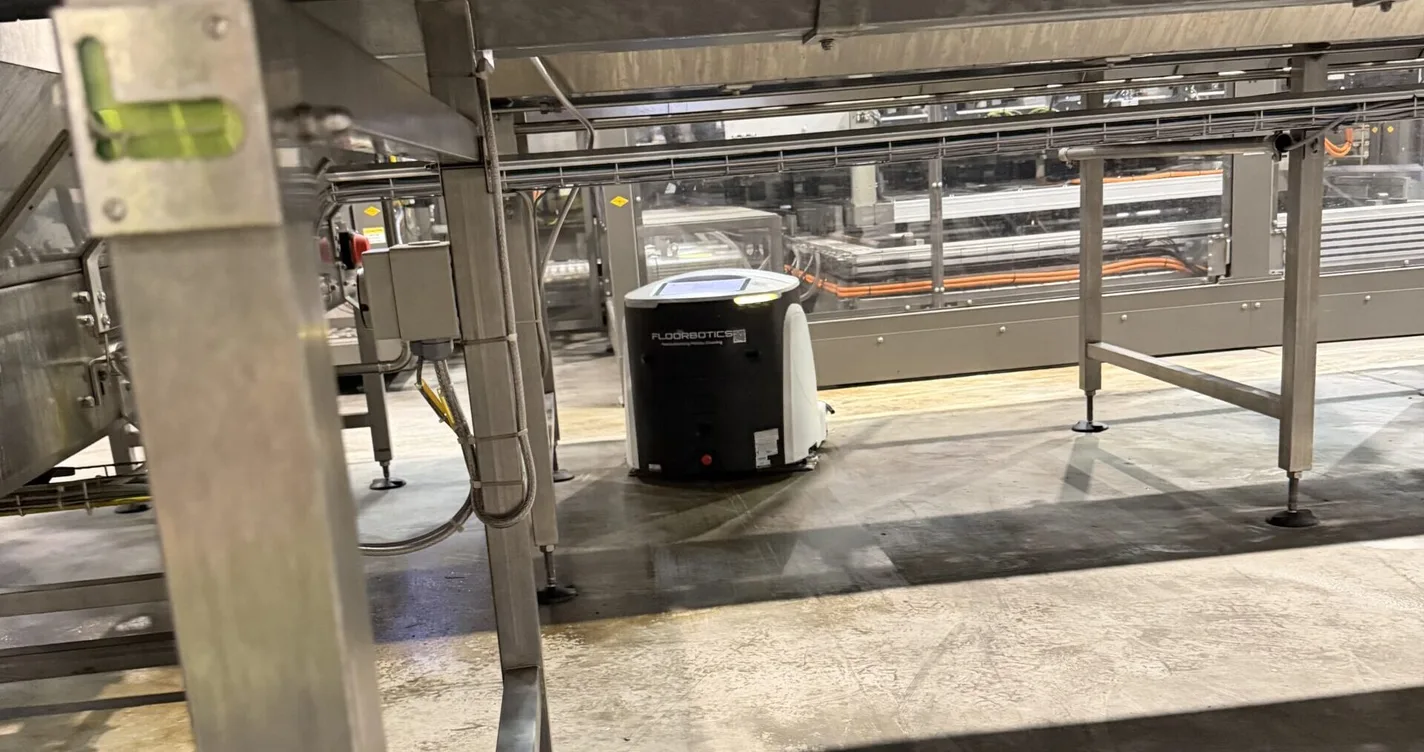
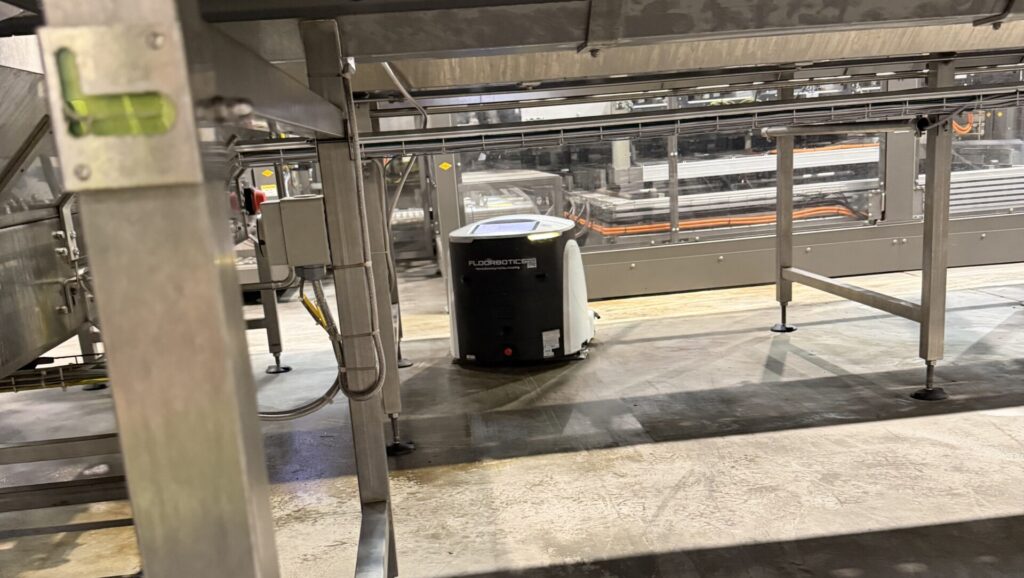
In a manufacturing environment, robots run scheduled routes under conveyor belts and across production floors. They clean continuously without pulling staff away from their core work, helping maintain a clean site every day rather than relying on periodic cleans.
Where Cleaning Robots Struggle
Robots do well on long, repeatable runs across open floor, on sites where the layout does not change nightly, and in buildings where noise matters. The Tennant X4 ROVR at 62 dBA is quiet enough for occupied areas.
They struggle with clutter, narrow gaps under 700 mm, ramps steeper than 8 degrees, and anything that needs cleaning up right now rather than on the next scheduled run.
This is why a hybrid approach works best. Robots handle the bulk work, while cleaners complete the detail.
Addressing the Hesitation: Trials and Training
We understand that adopting new technology can feel like a big step, especially when it is a significant investment.
That is why we offer flexible options such as leasing and six month trial programs. This allows businesses to confirm the robot is right for their site before committing long term.
We also handle onboarding properly. That includes training staff, mapping the site, and making sure the robot fits the space and the workflow. You are not left to figure it out on your own.
How to Get Started
The rollout matters as much as the machine choice.
- Start with one site and one machine. Learn what it actually does on your floor before re-equipping everything.
- Map the site properly. We handle mapping and setup, and the quality of the map decides the quality of the route.
- Train the person who runs it. Staff training is simple but essential: refilling tanks, checking brushes, and monitoring charging.
- Set the daily routine. Empty and rinse the recovery tank at end of shift, and leave the machine on charge rather than flat.
Involving staff early turns the robot from a threat into a tool they are glad to have.
A Small Amount of Maintenance for a Big Payoff
Cleaning robots are efficient, but they are not completely hands off.
They need a small amount of daily attention such as emptying tanks or checking brushes. This usually takes only a few minutes, and it is the same discipline any scrubber needs: empty and rinse the recovery tank at the end of the shift, and keep the machine on charge rather than flat.
Skip that and you get the same failures we see on manual machines. Smells from a tank left full, and batteries that die early because they were deep cycled.
The rest is a quarterly visit. Our robotic floor cleaner sales and service in Brisbane covers the inspection, filter changes, firmware updates and the docking station, on site rather than in a workshop.
Is It Worth It for Your Site?
If you have open floor, a repeatable nightly route and trouble filling shifts, the answer is usually yes.
If your floor is cluttered, split by steep ramps, or made up of small disconnected rooms, the answer is often no, and we would rather tell you that before you spend the money.
Send us your floor plan and we will tell you which way it falls.