The industrial sweepers that last longest are the ones with sealed dust filtration, a steel frame, and parts on a shelf in Brisbane. After servicing hundreds of ride-on and walk-behind sweepers across South East Queensland, that pattern is clearer than any brand badge.
This isn’t a brochure comparison. It’s what comes off our vans and what stays on the floor, with the published specs for the machines we stock so you can size the job before you ring anyone.
Which industrial floor sweeper is best?
For most Brisbane warehouses, a battery ride-on with a large hopper and multi-stage filtration, sized so it finishes the floor on one charge. The two ranges we see hold up best under that brief are Tennant and Nilfisk, for the same reasons: heavy frames, effective dust control, and local parts.
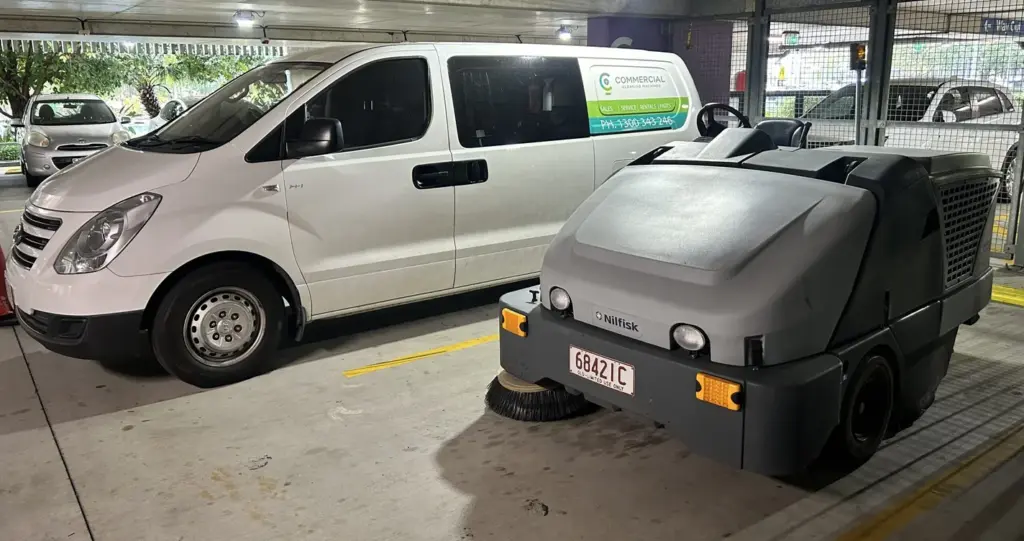
Tennant sweepers set the benchmark in our workshop. Steel frames built properly from the ground up, proven engines on the combustion models, and filtration that keeps fine dust inside the machine. With three or six monthly servicing, brush changes and filter maintenance, they run for years in harsh environments. Nilfisk sits close behind: strong frames, simple layouts, effective filtration, and sensible running costs. A Nilfisk sweeper serviced on time handles long shifts and mixed surfaces without fuss.
Neither is the cheapest machine on the market. Both are the cheapest to own over five years, which is the number that matters.
Do floor sweepers actually work on warehouse dust?
Yes, if the machine has a proper filter and someone shakes it. Sweeping doesn’t remove dust from a building on its own. The brooms throw debris into the hopper and the vacuum pulls the fine dust through a filter. If the filter is small, blinded or missing, the machine sweeps up the debris and blows the dust out the back, which is the complaint we hear about cheap sweepers.
The machines that do well here have a large filter area and an onboard shaker. Tennant’s S30, for example, uses an in-hopper filter shaker to knock dust out of the pleats, and Nilfisk publishes the filter area on every model. Run the shaker at the end of each shift and pull the filter out for a look if it isn’t clearing.
Fine cement dust, silica sand and dry leaf litter are the three that blind filters fastest in Brisbane. Sweep first, then scrub, and the scrubber’s pads and squeegees last far longer.
The sweepers we stock, with the numbers that decide it
Two figures on the spec sheet decide most purchases: cleaning path width, which sets how fast the machine covers the floor, and hopper capacity, which sets how long it runs before someone has to empty it. Runtime matters on battery machines. Aisle width matters on ride-ons.
| Machine | Type | Cleaning path | Hopper | Runtime or power | Coverage |
|---|---|---|---|---|---|
| Tennant S7 | Walk-behind, battery | 700 mm | 45 L | Up to 3 hours, 70 dBA | Up to 2,600 m² |
| Nilfisk SW750 | Walk-behind, battery | 720 mm | 60 L | 12 V battery | 1,730 m²/h actual |
| Nilfisk SW900 | Walk-behind | 825 to 1,050 mm | 60 L | Battery | 2,230 to 2,835 m²/h actual |
| Tennant S10 | Walk-behind, battery | 860 mm | 79 L | Up to 4 hours, 73 dBA | Up to 4,000 m² |
| Tennant 3640 | Walk-behind, battery | 815 to 1,015 mm | 85 L | Up to 4 hours, 71 dBA | Up to 2,300 m² |
| Tennant 6100 | Sub-compact ride-on, battery | 760 to 970 mm | 85 L | Up to 3.4 hours | Up to 7,700 m² |
| Tennant S680 | Compact ride-on, battery | 650 to 1,050 mm | 70 L | Up to 190 minutes, 72 dBA | Up to 6,300 m² |
| Tennant S780 | Compact ride-on, battery | 680 to 1,200 mm | 67 L | Up to 180 minutes, 70 dBA | Up to 7,400 m² |
| Nilfisk SR1000S | Compact ride-on, battery | 1,000 mm | 50 L | 24 V battery | 3,850 m²/h actual |
| Nilfisk SW4000 | Ride-on, battery | 975 to 1,250 mm | 75 L | 24 V battery | Up to 6,125 m²/h actual |
| Tennant S16 | Ride-on, battery | 1,170 to 1,520 mm | 150 L | 3.9 to 6.5 hours, 67 dBA | Up to 13,500 m² |
| Nilfisk SR1601 | Ride-on, battery | 1,250 to 1,600 mm | 315 L | 48 V battery | Up to 8,960 m²/h actual |
| Tennant S20 | Ride-on | 1,270 to 1,575 mm | 310 L | Battery, LPG, petrol or diesel | Up to 15,100 m² |
| Nilfisk SW5500 | Ride-on, diesel | 850 to 1,500 mm | 150 L | Diesel | Up to 10,500 m²/h actual |
| Tennant S30 | Heavy ride-on | 1,588 to 2,032 mm | 395 L | LPG, petrol or diesel, continuous | Up to 26,000 m² |
| Nilfisk SW8000 | Heavy ride-on, diesel | 1,650 to 2,000 mm | 400 L | Diesel | Up to 20,300 m²/h actual |
| Tennant 800 | Heavy ride-on | 1,680 to 2,100 mm | 850 L | LPG, petrol or diesel, continuous | Up to 33,300 m² |
Tennant publishes coverage per charge or per tank; Nilfisk publishes theoretical and actual square metres per hour, and the actual figure is the one to plan on. Both are from the manufacturers’ own sheets on our product pages. Read the smaller path figure as the main broom alone and the larger as main broom plus side brushes.
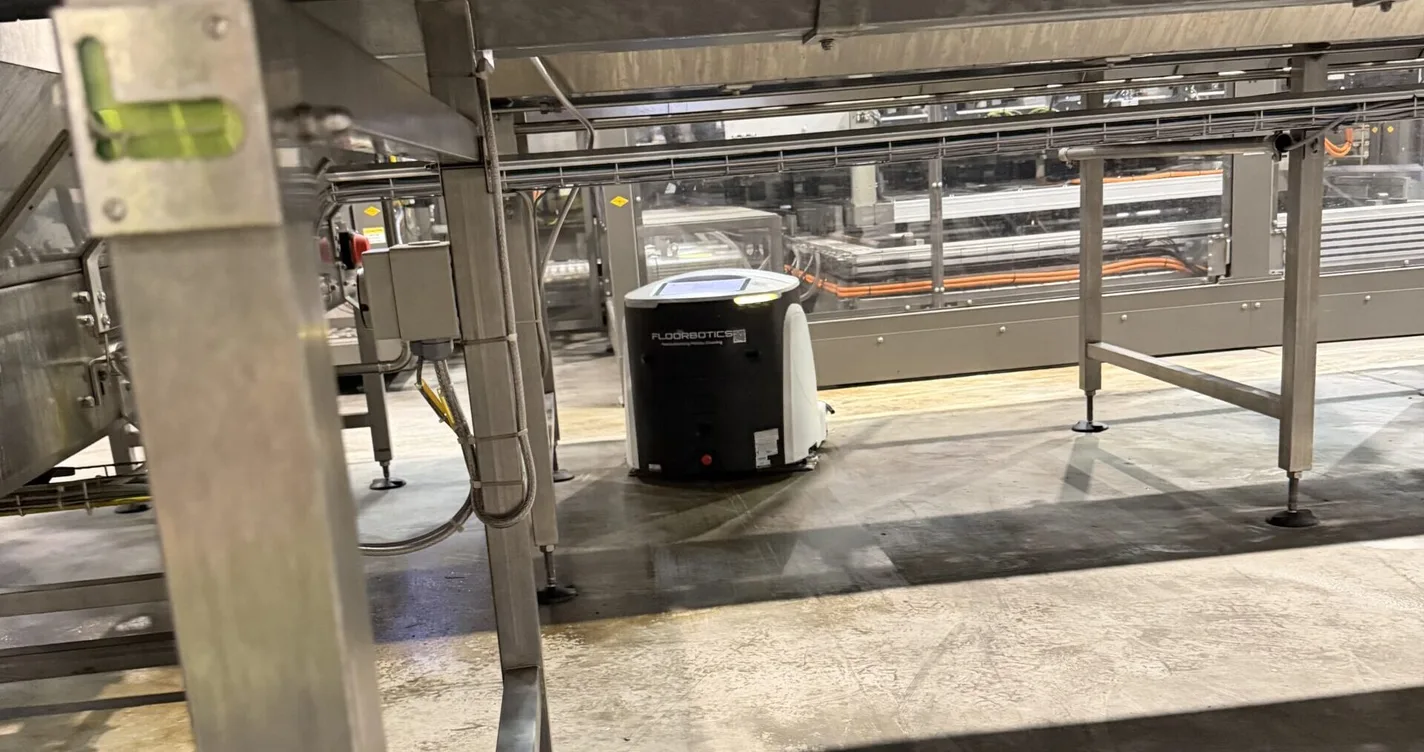
For sites that want the floor swept overnight without an operator, the FloorBot Max 80 carries an 80 litre hopper and the FloorBot Max 100 covers 3,000 square metres an hour with a 100 litre hopper and up to 8 hours of runtime. Whether a robot suits your floor is a separate question, and we wrote up where they don’t.
What kills a sweeper early
The same handful of failures fill our workshop, and most of them are setup and habit rather than the machine.
- Hydraulic hoses rubbing on the chassis. Some hydraulic ride-ons route hoses where they chafe, and they eventually leak. We re-route and spiral-wrap them on delivery, and they still find somewhere to rub over the years. Check them at every service.
- Bent front stub axles. Kerbs and dock plates hit at speed bend the stub axle, which gives wheel camber problems and uneven tyre wear. It shows up as the machine pulling to one side.
- Brush pressure set wrong from the factory. Some heavy-built machines need setup work to get even brush contact across the floor. Too light and it misses. Too heavy and it wears brushes in weeks and loads the motor.
- Filters never shaken. The dust ends up inside the machine, then in the motor.
- Wet leaf litter. Brisbane’s wet season from October to March tracks wet leaves and silica sand indoors, and wet leaves clog hoppers and wrap brooms. Operators tell us the same thing about cheap push sweepers on a wet driveway. Sweep dry where you can, and clear the broom after a wet run.
- Brush hubs and caps. On light machines the side brush caps and drive hubs are plastic and come off. On the industrial machines we stock they don’t, which is a fair part of the price difference.
- Parts from overseas. A machine with no local parts or service support turns a simple repair into a six-week wait. We stock Tennant and Nilfisk parts in Brisbane and carry common spares on the vans.
We’ve had one budget range come through the workshop with regular electrical and ignition faults, poor dust tolerance, and a long list of small problems that added up in labour and parts. We stopped recommending it. The total cost of ownership ended up far higher than a comparable machine from a supported brand.
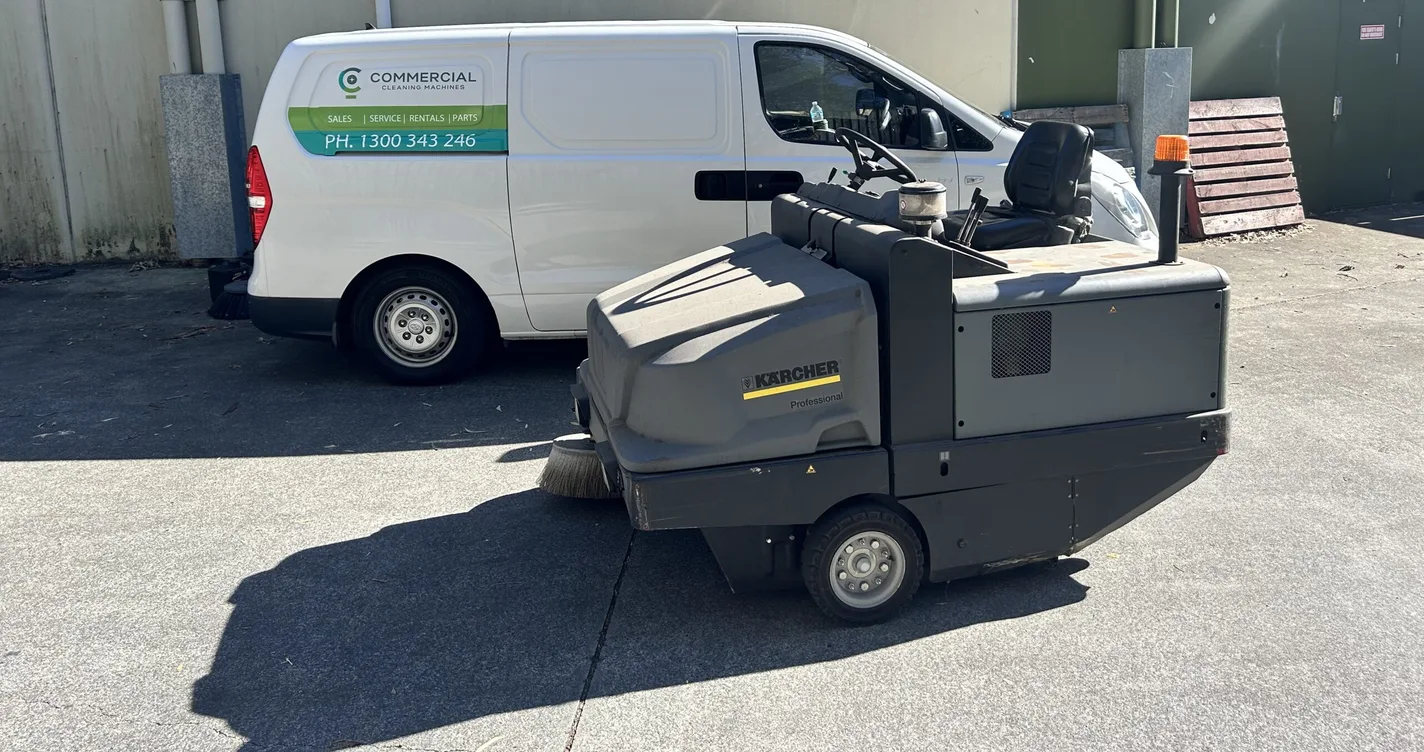
How to choose the right industrial sweeper
- Match the dust. Fine indoor dust needs good filtration and sealing. Coarse outdoor debris needs a simple design and durable brooms.
- Match the duty cycle. Long shifts and outdoor yards suit heavy builds. Lighter or mixed sites suit a compact battery machine. Either way it must finish the floor on one charge or one tank.
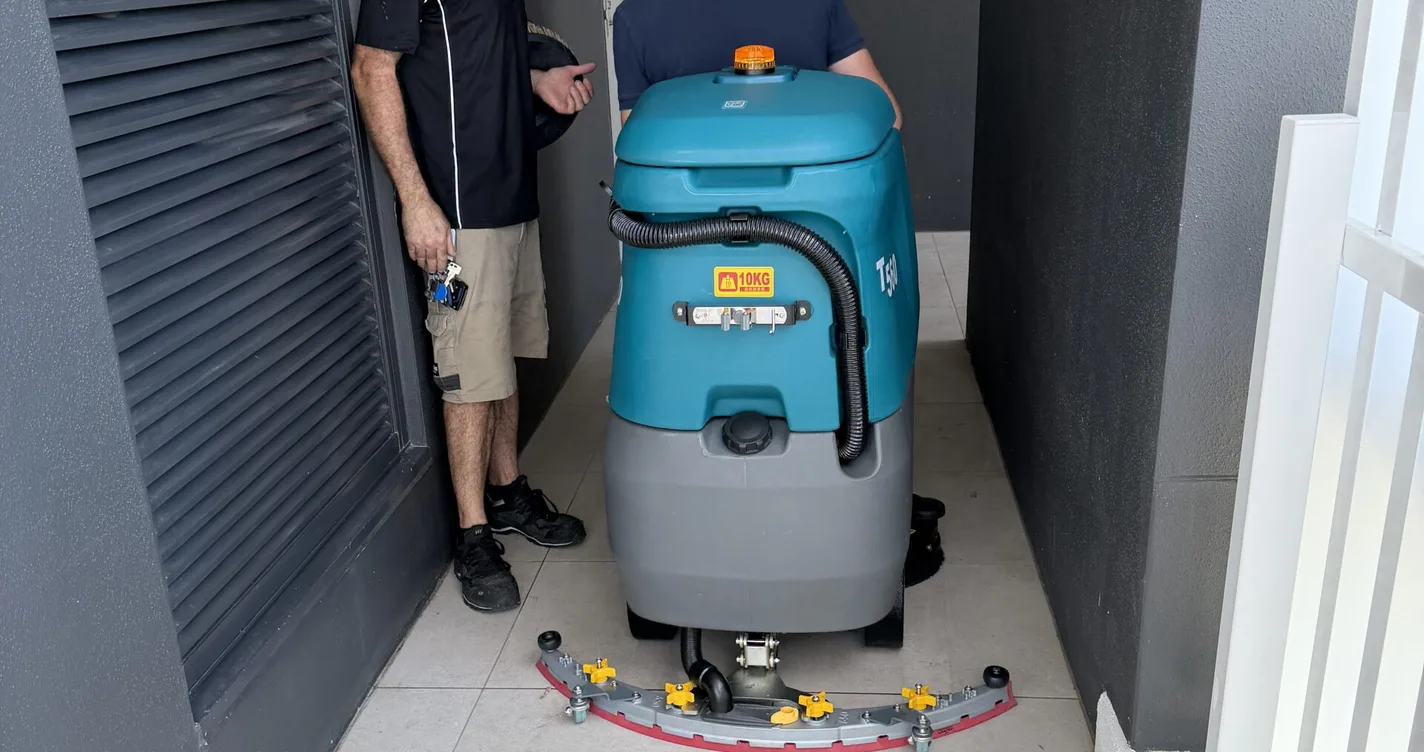
- Check the aisle. Nilfisk publishes minimum turn-around width for each ride-on, from 155 cm on the SR1000S to over 300 cm on the SR1601. Measure your tightest aisle before you look at anything wide.
- Plan the maintenance. Three or six monthly servicing of brooms, skirts and filters prevents the expensive breakdowns. Our floor sweeper service and repairs covers Brisbane and the Sunshine Coast from stocked vans.
- Think lifetime cost. Uptime, parts availability and ease of servicing matter more than the cheapest purchase price.
If the floor has film, grease or marks rather than loose debris, you need a scrubber, not a sweeper, and often both. Our guide to how to choose a floor scrubber for a Brisbane site covers that side.
Try before you buy
Hire the machine you’re considering and run it on your own floor for a fortnight. Two weeks of your dust and your aisles beats any coverage figure on a brochure, including the ones above. Floor sweeper hire in Brisbane covers walk-behind and ride-on machines, delivered serviced and ready to run.
When you’re ready, the full industrial floor sweeper range is on the site, or tell us your floor area, debris type and tightest aisle and we’ll tell you which machine stays out of the workshop on your site.
Common questions
What is the difference between a commercial and an industrial sweeper?
Build weight and debris capacity. Commercial sweepers suit retail, hospitality and schools with light debris. Industrial machines carry heavier frames, bigger hoppers and stronger filtration for warehouses, yards and manufacturing.
How often should an industrial sweeper be serviced?
Every three to six months depending on hours, with brooms, skirts and filters checked each time. Multi-shift and outdoor sites lean toward three.
Can a sweeper handle wet floors?
Most can’t. Wet debris clogs the hopper and wraps the brooms. Sweep dry, or use a sweeper-scrubber combination for mixed conditions.
Is a ride-on sweeper worth it over a walk-behind?
Above about 3,000 square metres of open floor, yes. Below that, or in tight aisles, a walk-behind such as the S10 or SW900 covers the ground without the turning circle.