A cleaning robot saves the hours a person spends walking a machine up and down an open floor, and nothing else. On a large, flat, repeatable floor that’s most of the cleaning bill. On a cluttered one it’s close to nothing. The decision between autonomous and manual cleaning is a coverage sum, not a technology question.
Here’s the sum, the running costs, the daily upkeep, and the sites where a person still wins.

The ongoing cost of manual cleaning
Facilities without their own equipment usually pay a contractor to clean floors weekly or fortnightly, and for a standard-sized site that sits around $1,200 to $1,500 a month. Labour rates rise, and the cost never stops.
Quality varies too. Contractors may do the minimum required, and floors are allowed to get dirty before the next visit.
The fixed cost of autonomous cleaning
With autonomous cleaning machines there is an upfront purchase, or a fixed lease or finance payment. Instead of an endless labour expense you’re paying toward an asset, and at the end of the term the robot is yours.
The bigger change is frequency. The robot can clean every night, or several times a day, so floors stay consistently clean instead of cycling between dirty and clean.
Run the coverage maths, not the sales pitch
The number that decides this is square metres per hour against the hours you’re currently paying for. Our ROI calculator assumes manual cleaning at roughly 121 square metres an hour and a robotic scrubber near 1,300 on the machine pass, close to ten times the coverage. Enter your own cleaner hours and hourly rate and it gives you a payback period.
Coverage and tank size have to be read together. A fast machine with a small tank converts cleaning labour into refilling labour.
| Machine | Type | Coverage | Tank or hopper | Runtime | Site fit |
|---|---|---|---|---|---|
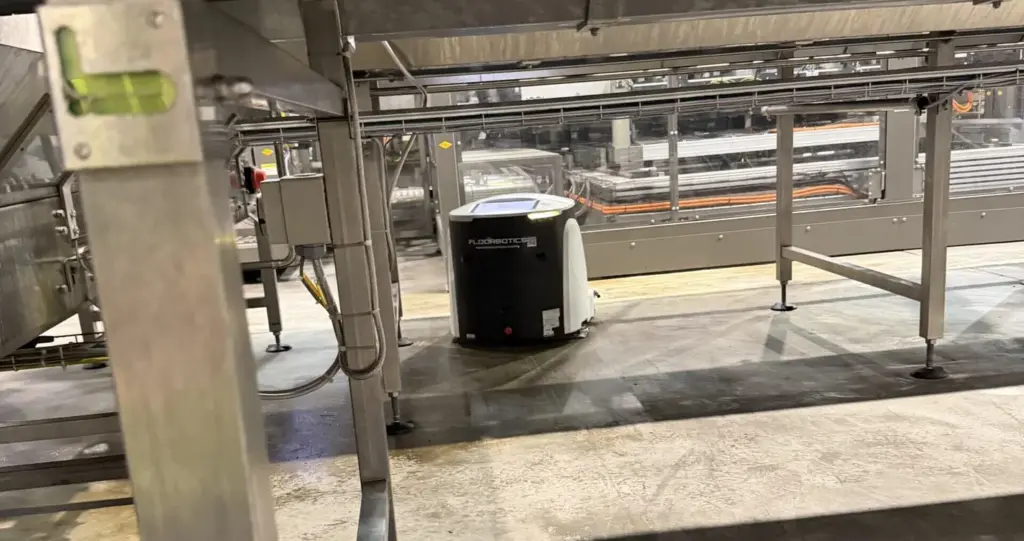
| FloorBotics Quad 500 | Robotic scrubber | Up to 1,440 m²/h | 17 L solution | About 6 h | Mid-size sites; someone refills it on a big floor |
| FloorBotics Quad 800 | Robotic scrubber | Up to 1,800 m²/h | 42 L | About 6 h | Large floors; docks to a workstation that refills and drains itself |
| FloorBotics Quad 1100 | Robotic scrubber | Large area | 140 L | Up to 7 h | Very large sites, genuinely unattended overnight |
| FloorBot VRS 55 Enduro | Robotic scrubber | About 4,000 m² per cycle | Compact | Up to 28 h per cycle | Long runs, passes 700 mm gaps, inclines to 8 degrees |
| FloorBot Max 100 | Robotic sweeper | Up to 3,000 m²/h | 100 L hopper | Up to 8 h | Dust and debris rather than film |
| Tennant X4 ROVR | Robotic scrubber | 1,860 m² per tank | Compact | About 2.5 h | Congested areas, 500 mm path, 62 dBA |
All figures are from the manufacturers’ sheets on our product pages. Divide your actual cleanable area by the machine’s hourly rate, and compare that to what you pay for the same area now. A 6,000 square metre floor is a few hours of Quad 800 time against a weekly contractor visit. Run the same sum on a Quad 500 and the 17 litre tank changes the answer on a big floor.
What does a cleaning robot cost to run?
As an indicative guide tied to the calculator’s machine types, robot vacuums start around $25,000, robotic sweepers around $30,000, and robotic scrubbers around $35,000 and up for larger models. Price varies with model, attachments and support package.
Running costs are electricity, water, consumables and servicing. Pads, squeegees, brushes and batteries are the same consumables any scrubber uses. For most floors over about 1,500 square metres cleaned three or more times a week, the calculator regularly shows payback under 24 months at current labour rates. Below that threshold a traditional ride-on or walk-behind machine can be the better spend.
What maintenance does a cleaning robot need?
A few minutes a day and a service every quarter. Daily, someone empties and rinses the recovery tank, checks the brushes and squeegee, and leaves the machine on its dock. That’s the same discipline any scrubber needs, and skipping it produces the same failures: a tank left full smells and loads the pump, a pack left flat dies early.
Machines with an automatic workstation, like the Quad 800 and 1100, refill and drain themselves, which takes the tank job off the list. Quarterly inspections and filter changes extend the machine’s life, and the robots on our robotic cleaner servicing plans in Brisbane run five to eight years with routine maintenance. Humidity-resistant seals matter in Queensland, and they’re standard on the machines we stock.
Mapping is done once at setup, and we handle it. If the layout changes, the map is updated rather than the machine replaced.
From weekly cleans to daily results
Take a warehouse spending $1,500 a month on manual cleaning. Over several years that adds up quickly, and it buys nothing. Move that spend to a robot on a similar monthly outlay and it builds ownership of equipment while the site gets cleaned daily instead of weekly, and staff stop being pulled off their primary roles to cover the floor.
Lower risk and more control
Autonomous cleaning removes the variability. You decide when the robot runs, how often, and where. It’s always available rather than tied to someone else’s schedule.
Machines like the Tennant X4 ROVR also log what they cleaned and when. If you report to a landlord, a client or an auditor, that record is worth more than it sounds. We’ve watched it settle a dispute that had run for months.
Where manual still wins
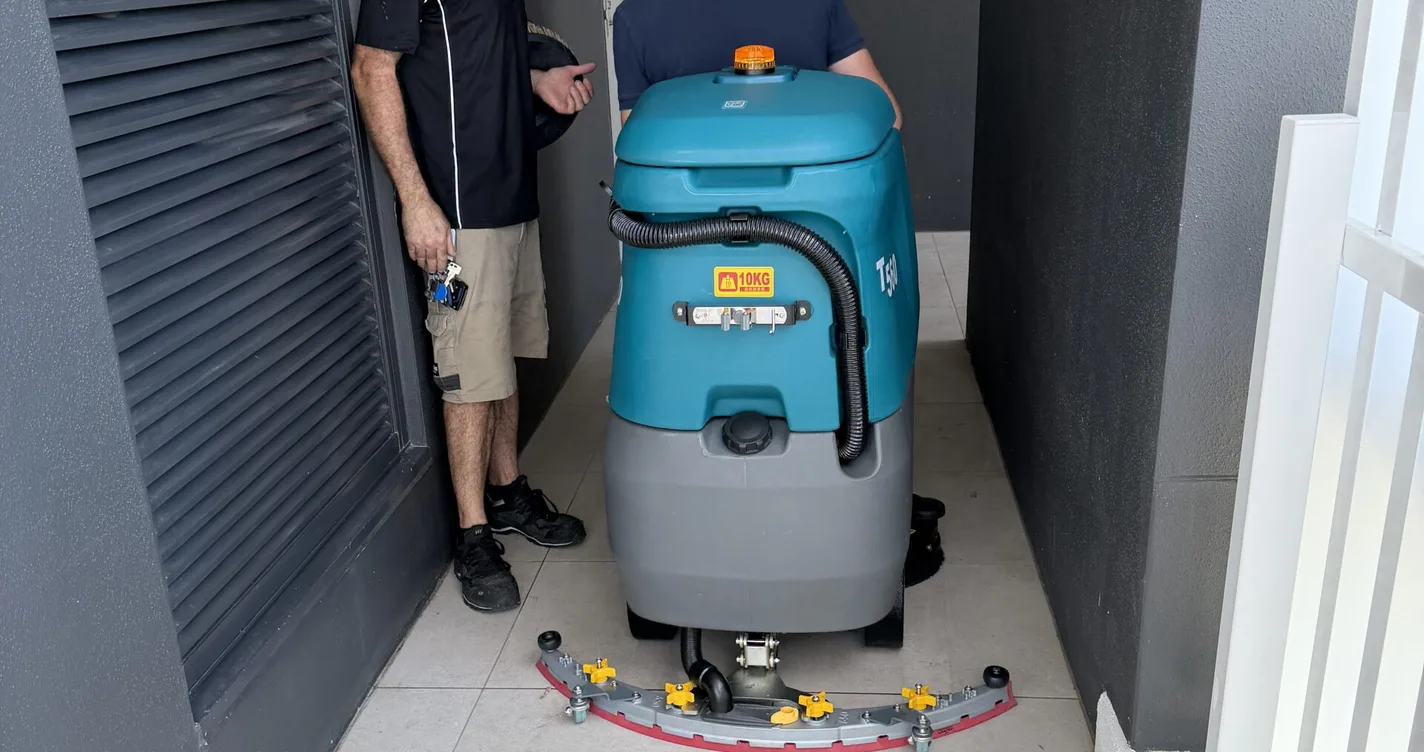
Being straight about this saves you money. Manual cleaning still wins on small, broken-up floors, on anything under about 700 mm of clearance where no robot in the range fits, on ramps steeper than 8 degrees, and on any spill that needs dealing with now rather than on the next scheduled run. If someone has to clear pallets so the robot can run, the labour has moved, not disappeared. The full list is in when cleaning robots do not make sense.
Most sites end up running both. The robot takes the open floor, a person takes the detail.
The bottom line
Autonomous cleaning isn’t only about saving money. It’s consistency, predictability, and a cleaning outcome that holds regardless of who turned up for the shift. If your floor is open, flat and cleaned most nights, run it through the calculator and then book a demo on your own floor. The commercial robotic cleaning machine range is on the site with full specs.
Common questions
How many hours a week does a cleaning robot save?
Roughly the hours currently spent on the open floor. If a cleaner spends ten hours a week walking a scrubber up and down a warehouse, most of those ten go.
Does a cleaning robot replace the cleaner?
No. It takes the repetitive floor work and frees the cleaner for touch points, amenities and edges.
How much does a cleaning robot cost to maintain?
Consumables and a quarterly service, plus a few minutes a day on tanks and brushes. Machines with an automatic workstation cut the daily job further.
What size floor justifies a cleaning robot?
Around 1,500 square metres cleaned three or more times a week is where the calculator regularly shows payback under two years.