Four things are changing in commercial cleaning equipment: robots have become a sizing decision rather than a novelty, lithium batteries are the default on new machines, cleaning is using less water and less chemical, and the machines now record what they did. Everything else on the trend lists is a version of one of those.
We service floor scrubbers, sweepers, steam cleaners and robots across Brisbane and South East Queensland, so we see which trends survive contact with a real warehouse and which stay in the brochure. Here’s each one as it looks from the bench.

Are autonomous cleaning robots worth it yet?
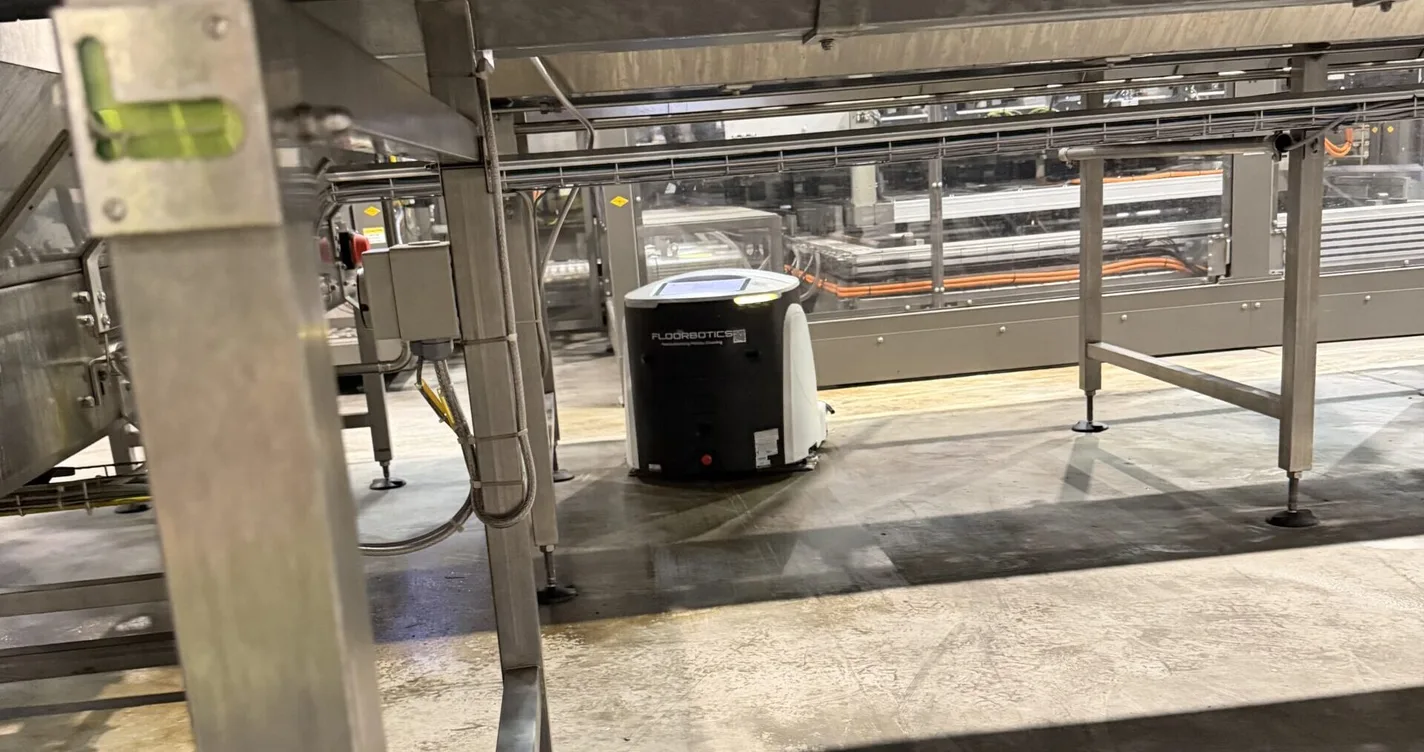
Yes, on the right floor, and the question has moved from whether they work to whether your floor suits one. Autonomous scrubbers and sweepers clean large open areas without supervision, keep the same standard every night, and log what they covered.
The practical constraints are aisle width, ramp gradient and tank size. The narrowest gap a robot in our range passes is 700 mm, ramps top out around 8 degrees, and a small tank turns cleaning labour into refilling labour. Machines like the FloorBotics Quad 800 scrub 1,800 square metres an hour and dock to a workstation that refills and drains without a person, which is where genuinely unattended overnight cleaning starts.
We’ve written up where robots do not make sense separately, because that’s the more useful half of the conversation, and whether they’re worth it for Australian sites. If you want the number, the ROI calculator takes your floor area and cleaner hours and gives you a payback period.
Is lithium worth it on a floor scrubber?
For multi-shift sites and anywhere the machine gets grabbed mid-charge, yes. Lithium packs charge faster, tolerate partial and opportunity charging, and last more cycles than lead-acid. That’s why they’re turning up on more new machines, including the Duplex lithium floor scrubber in our range.
The trade-off is cost up front and, on some aged care and hospital sites, a preference for sealed lead-acid on compliance grounds. Battery is now the default over cord and engine for indoor work either way. No trailing cords, no fumes, and quiet enough for occupied buildings.
The constraint nobody quotes is charge time. Runtime is on every spec sheet. Charge time usually isn’t, and it decides whether one machine can cover two shifts. Ask for both numbers. The charging habits that protect the pack are in the floor scrubber maintenance guide.
What does sustainable cleaning actually mean for equipment?
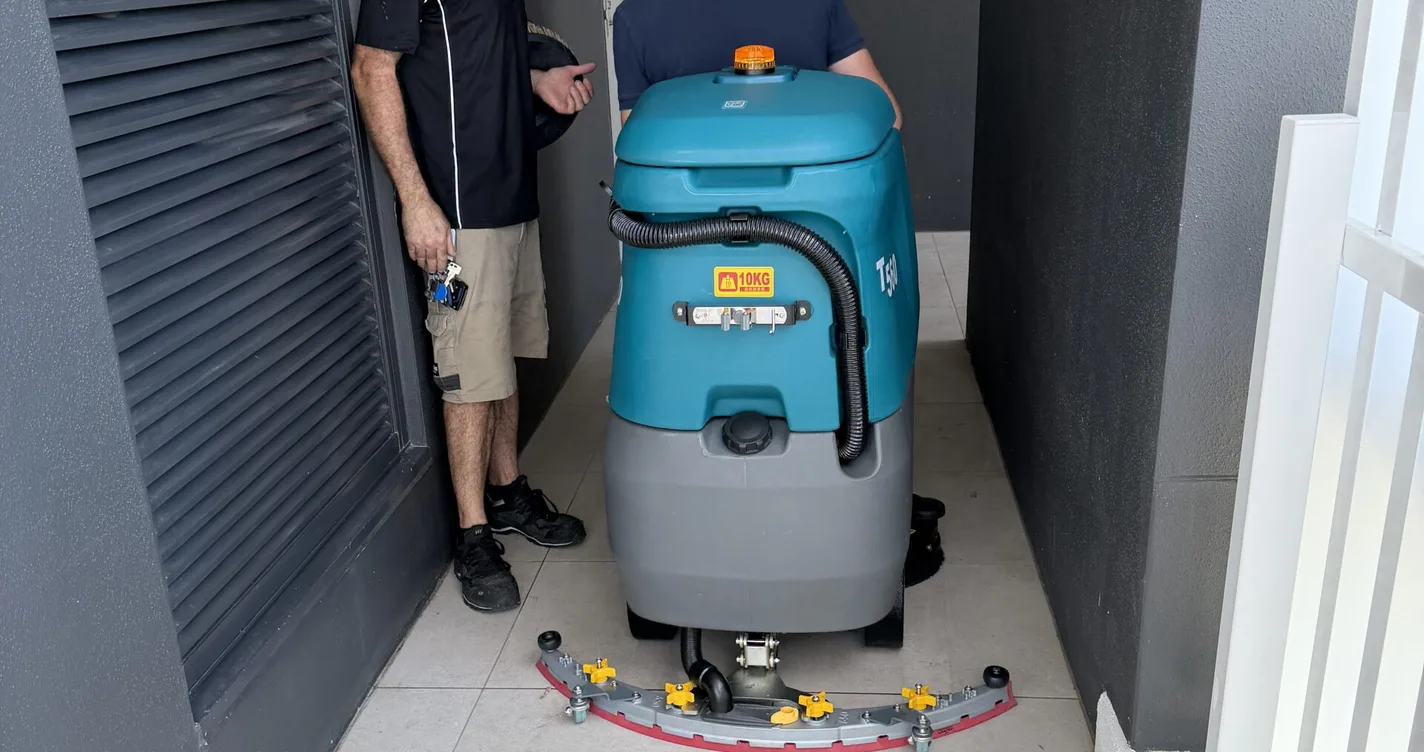
Less water and less chemical, mostly. Scrubber-dryers already use a fraction of the water a mop and bucket does, because they lay solution down and recover it in the same pass. Steam cleaners go further by sanitising with heat instead of product, which is why they keep turning up in food service and healthcare specifications.
Machines are also being built with longer-life components and energy-efficient motors, which cuts waste and lifetime cost. Chemical-free isn’t a marketing line on these floors. On a childcare centre or a commercial kitchen it’s the reason the machine was bought.
Is machine data worth paying for?
Only if someone reads it. Newer machines report area covered, run time and service intervals. Robots log every route. If you clean under contract, that log settles disputes about whether a site was done. We’ve watched it end an argument that had run for months.
It also lets a facilities team benchmark sites against each other and catch a machine that’s being run half as hard as its neighbour. If nobody opens the dashboard, you’ve paid for a feature you’ll never use. Decide who owns the data before you pay for it.
Janitorial technology after the pandemic: which hygiene tools matter?
The ones that reach the surfaces mops skip. Grout lines, drain surrounds, fixtures and touch points are where inspections are failed, and none of them are helped by a wider cleaning path. High-temperature steam, UV disinfection and touch-free tools all target those surfaces. Hospitals and aged care sites specify them for compliance, and the rest of the market follows.
What industrial cleaning technology would we put on a Brisbane site first?
Not the newest technology on this list. The highest-value change for most sites is replacing mopping with a scrubber-dryer on any hard floor over a few hundred square metres, because that single change improves hygiene, cuts slip risk and reduces labour at the same time. We covered the comparison in do floor scrubbers really work.
After that, put whatever you already own on a real service schedule. Six or twelve monthly depending on duty, three monthly for multi-shift and hospital sites. A well-maintained older machine beats a neglected new one every time, and we see the evidence on the bench every week.
The trend nobody puts on a list
Every year the equipment gets smarter and the same three failures keep filling our workshop. None of them are technology problems.
- Batteries run flat and left flat. Deep cycling kills a pack faster than heavy use does, and on most machines the pack is the single most expensive consumable. Charging at end of shift, every shift, costs nothing.
- Recovery tanks left full overnight. This causes most of the “the machine smells” calls we take, and a share of the pump failures behind them.
- Squeegee blades run past worn. A worn blade leaves a wet trail, the operator slows to compensate, and you lose the productivity you bought the machine for.
Whatever you buy this year, the schedule matters more than the spec. Our maintenance plans exist so the interval isn’t something anyone has to remember, and we run same-day repairs from stocked vans across South East Queensland when something does go down.
Where to start
Pick the floor that costs you the most labour and work out whether the machine on it is the right one. That’s usually a bigger win than anything on the trend list, and you can answer it this week. If you want a second opinion, send us the floor type, the area and your cleaning window and we’ll tell you what fits from the commercial cleaning machine range.
Common questions
What is the biggest trend in commercial cleaning equipment?
Robotics for open floors, and lithium batteries as the default power source on new machines. Both are sizing decisions now rather than experiments.
Are robotic cleaners replacing cleaners?
No. They take the open-floor work and free the cleaner for touch points, amenities and edges, which is the work clients notice.
Is steam cleaning better than chemicals?
For sanitising fixtures, grout and touch points, steam does the job with heat and no residue. It doesn’t replace a site’s hygiene policy, it reduces how much chemical is needed to meet it.
Should I buy the newest machine or service the one I have?
Service the one you have first. If it’s sized right for the floor and sound, a service costs a fraction of a replacement and gives you most of the gain.